
|
Despite the gales and torrential rain, a cheery band of intrepid explorers headed off to Wild Woodbury in deepest, darkest Dorset.
We were spurred on by memories of the enthusiastic and interesting talk given by Rob Farrington in January about Wild Woodbury, near Bere Regis and this was to be our quest: what had happened to this site, acquired in 2021 by Dorset Wildlife Trust? Our guide for the day was Seb Elwood and, as we turned into the car park, the rain stopped, Seb greeted us and all would be well. Since 2021, the area of farmland has been allowed to rewild. From bare earth have sprouted meadows, completely naturally, no seeding has taken place apart from nature’s own handiwork. Standing at the top of the site, surveying the surrounding fields, it is hard to comprehend where the flowers and plants have come from as the view shows neatly planted crops all around, but nature brings its own. Seb explained how this part of the site will become an open area of meadow, accessible to everyone (and their dogs!) and so providing an amenity to the nearby village of Bere Regis. There are plans for a farm shop and picnic areas to encourage locals and visitors from further away to enjoy the site and to refresh their spirits. The main project over the past three years has been to return the waterways that traverse the land to their natural courses. A lot of work has gone into removing the agricultural drainage (from the top of the hill it appears that the stream ran uphill!) and allow the streams to run where nature intended. Fauna has begun to return to the site, all carefully logged and recorded in order to show how the rewilding is benefiting the natural order of things. Seb told us that the fields were bare earth when Dorset Wildlife moved onto site. This soon changed and became covered with signs of mice and after that, signs of owls, predating on the mice! Seb was a knowledgeable and interesting host and guide. He answered the many questions from our interested members. Seb’s enthusiasm was infectious and we were all stimulated and our quest was complete. We hope to go back in the future to see what happens next. So much has been done in three years. What will the next three years hold? by Emma Procter. On Saturday 6th July, we have a visit to Wild Woodbury, Bere Regis, with a walk of approximately 4km/2.5 miles across uneven ground around this rewilding community project guided by Dorset Wildlife Trust Ranger, Seb Haggett. There is a portaloo on site at the car park.
If you are used to walking poles it will be worth bringing them. Walking shoes/boots are advised and please bring a packed lunch and refreshments. The weather is looking good for Saturday, with dry, sunny spells forecast. There are ticks on site, along with longer vegetation, so trousers are recommended. Also bring along any wildlife spotting equipment, binoculars, cameras etc. Please let us know if you are planning to join the trip and where you will meet us. No dogs. Meet at the Nadder Centre car park at 9:30am or at 10:30am up a short track off Southbrook Road, opposite Eldon Road in Bere Regis. https://maps.app.goo.gl/qXbC482vgk4pZ6Qt6 What3words: permanent.kings.chef Those of you that came along to our meeting in January will recall the fascinating presentation by Rob Farrington of the work he has been leading for the past two and a half years to re-wild the 170-hectare site, south-east of Bere Regis. The plot acquired by Dorset Wildlife Trust was In September 2021 with plans to return what was previously intensively farmed arable land to its natural state. The goal was to create an example of sustainable land use, contribute to tackling the climate and ecological crises, reduce high nitrate levels in the area (and prevent them from entering Poole Harbour), and to engage the local community. In the first year of the project, the land was allowed to naturally regenerate: there was an immediate increase in biodiversity and abundance, with the site list reaching 1300 species. During 2023, the second year of the project, work was carried out to ‘re-naturalise’ the headwaters of the River Sherford that run through the site. More information: https://www.dorsetwildlifetrust.org.uk/blog/tag/wild-woodbury Anticipated end time: Returning to Tisbury by 3:30pm  Ham Wall Reserve by LesBardd via Wikimedia Commons On Saturday 8th June we have planned a field trip to Ham Wall RSPB Nature Reserve near Glastonbury with Andrew Graham and Debbie Carter as your guides. The focus will be on birds but there should be many other wildlife to see. Bring binoculars if you have them. No dogs.
Please let us know by Thurs 6th June evening whether you plan to go on this trip and whether you will car share from the Nadder Centre or meet us at the Reserve because we need to know numbers in advance. Without this information there is risk that this field trip could get cancelled. We do require a booking for each field trip in our programme. Meet at the Nadder Centre car park for a departure at 9.30am or at the Ham Wall Nature Reserve BA6 9SX for 10:30-45am. The car park is at OS ST44893959. What3words biggest.sharpened.clots https://www.rspb.org.uk/days-out/reserves/ham-wall/location Anticipated end time: Departing Ham Wall at 3:00pm to arrive back at the Nadder Centre by 4:15pm. Distance, Difficulty and Footwear: Approximately 5 km/3 miles on flat gravel paths which may be a bit muddy if there has been recent rain. Good stout shoes should suffice rather than wellingtons. Climbing steps may be necessary to enter hides. Bring a packed lunch and refreshments. On the Field Trips page, you'll see that we've updated the in-depth document for the Field Trips. Please note that the Wild Woodbury field trip is on Saturday 6th July, not Sunday as previously listed.
Andrew Graham is leading a walk through Bentley Wood, West Dean with a focus on butterflies. Meet at the Nadder Centre car park for a 9:30am departure or at Bentley Wood Eastern Car Park, West Dean, for a 10:30 am start. (GR SU 258 291. What3Words: filled.village.screeches) There is no limit on this field trip, but if you could let us know beforehand it helps with organising car shares and knowing if you plan to meet us at West Dean. Bentley Wood is a 1,700 acre (688 ha.) nature reserve and Site of Special Scientific Interest, roughly 7 miles east of Salisbury, that has been worked for at least 2,000 years (and is still commercially managed today, though with a view to conservation). If you want to read more about the wood ahead of the visit, go to this blog on the Hidden Wiltshire website: https://www.hiddenwiltshire.com/post/bentley-wood 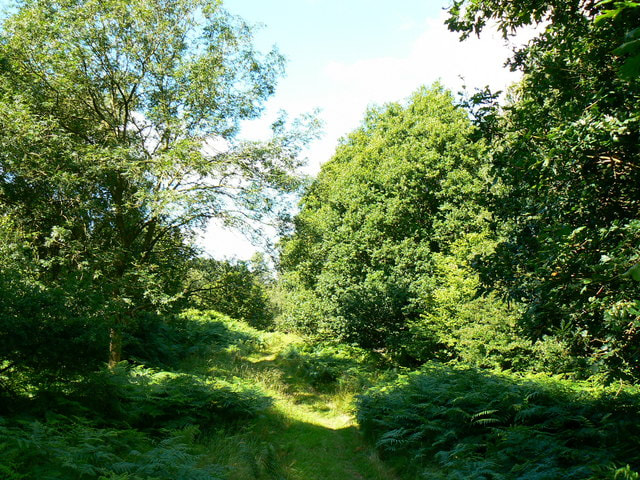 Path west through Bentley Wood (c) Brian Robert Marshall, Wikicommons
On the Field Trips page you can now access the document which shows the postcode location of the destination, distance, difficulty, footwear and picnic advice for each field trip.
We also indicate the times for meeting at the Nadder Centre, as we encourage members to share lifts, plus the start and estimated finish time at the location. We have limited numbers on only one field trip: on Bank Holiday Monday 6th May. 5.30 pm. Guided bird walk at Chicksgrove. If you would like to sign up for this one, do let us know on the Contact page. The programme for 2024/5 is now available and can be found on the pages Field Trips and Talks & Films.
We shall be publishing a more detailed guide to the Field Trips in the near future. The calendar for field trips is now listed on the Field Trips page if you want to pencil them in your diaries. The Committee is just finalising the detailed programme document with all the meet up postcodes, what to wear and bring, plus a short description of each trip.
This programme document will be uploaded to the website next month, when we'll let you know about how to book your places. 15 members and friends gathered on the car park at Lodmoor on a bright, sunny but slightly chilly morning. Andrew started out by describing how the marshland of Lodmoor had been designated an SSSI in 1952 but had still suffered from being used as the municipal rubbish dump until the 1970’s. Mercifully, only about a quarter was infilled but this is still evidenced by the vents allowing gases from the landfill to escape – into the car park. Nice.
Lodmoor lies on the east side of Weymouth the earlier parts of which lie on slightly higher ground which separates Lodmoor from Radipole Lake to the west. As the area drains south eastward toward the sea, the freshwater marshes become progressively more brakish until, close to the sea wall and the sluices which control the flow of water between the moor and the sea, it becomes saltmarsh. The flat nature of the area means that reeds, rushes, and other vegetation can obstruct clear views, but we walked along the perimeter paths which gave good visibility out over some of the pools. There were plenty of birds to see including numerous Canada Geese, Lapwings, Teal, Mallard, Shoveller and Gadwall as well as a variety of gull species. The highlight was a flock of around 40 Golden Plover which occasionally got up and flew around together in the sunshine, alternately showing their white undersides and speckled golden upper parts as the swooped around in the blue sky. There were also plenty of Grey Herons as well as several Little Egrets and at least three Great White Egrets. Unfortunately, the Spoonbills which often show up at Lodmoor were not present. These, as well as Egrets, were very unusual birds on Lodmoor 30 years ago but are now relatively commonplace as they colonise the south of the country. There were relatively few wader species to be seen. In addition to about a score of Black Tailed Godwits there were a handful each of Dunlin and Snipe. After being a bit irritating by only showing briefly above the reeds a Marsh Harrier eventually made a decent, very visible flight across the moor. This is another bird, once vanishingly rare in Weymouth which is now resident and breeding and which can usually be seen at Lodmoor and Radipole. After lunch we went over to Radipole Lake which, like Lodmoor, is now managed by the RSPB as a nature reserve. Very different to Lodmoor, visibility is much more restricted by the dense reed beds which make up so much of the reserve. In summer these are full of Reed and Sedge Warblers but throughout the year you can hear the distinctive, and very loud, call of the Cetti’s Warbler. We had our ears peeled for the distinctive call of the Bearded Tit or Bearded Reedling as it is now known (because technically it isn’t a Tit) because this beautiful but elusive bird is more often heard than seen. Unfortunately, we were unlucky although we did hear the unmistakable squealing call of the Water Rail, another rarely seen resident of the reed beds. At the top end of the loop path known as Buddleia Walk, we had views out over the open water where we added Pochard and Tufted to our list of ducks. By the time we dispersed from the car park at Radipole we had seen or heard 40 species of birds, which included Swallow, several of which were flying over on their way south throughout the day. Andrew Graham 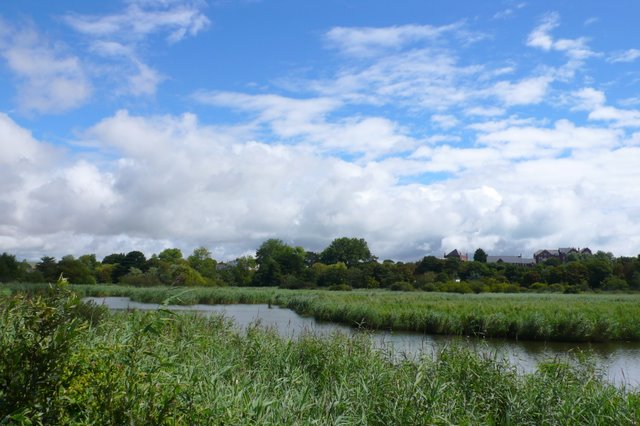 Nigel Mykura / Radipole Lake Andrew Graham has organised our last trip of the season to these two RSPB reserves in Weymouth. The focus will be on resident and migrant birds. Bring binoculars if you have them. No dogs.
Meet at the Nadder Centre car park at 09:00am or at the Beach car park at Lodmoor DT4 7SX, just to the west of the entrance to the Lodmoor reserve, at approximately 10:30am. Distance, Difficulty and Footwear : The combined distance at these two separate locations will amount to approximately 5 km/3 miles on flat gravel paths which may be a bit muddy after rain. Good stout shoes should suffice rather than wellingtons. Bring a packed lunch and refreshments. There is no limit to numbers on this visit, but it will help if we know how many people to expect. Either use the Contact form here or send us an email to the address mentioned in the members' newsletter. |
Photo: Avocets (Izzy Fry)
The headers display photos taken by our members. Do get in touch via the Contact Form if you'd like to submit a photo for selection.
Archives
May 2024
Categories
All
|
 RSS Feed