What birds can we find in Tisbury and surrounding areas?
Photo: Lapwing (Izzy Fry), text by Andrew Graham.
The list below contains the bird species that you may see in Tisbury and surrounding areas*. The more unusual the species, the less reliable will be the information provided, as the situation for the less common species is more likely to be affected by weather, good and bad seasons, or changes in
management in key locations.
The terms used in the status column of the table are:
Breeding: Known or considered likely to be breeding in the area
Present: Known to be in the area but not necessarily breeding, although that cannot be
ruled out in every case.
Passage migrant: Can be seen, particularly during spring and autumn migration, although
not known to stay and breed.
Summer Visitor: Migrant which visits and remains in the area during summer, in some
cases breeding.
Wintering: Winter visitor from breeding locations further north.
Overflying: Species seen in the area on the wing but not known to be permanent in the
area.
Vagrant: Species wandering into the area, at any time of the year, perhaps from breeding
releases or because of an irruption from the continent.
In the Notes column of the table, the (very rough) abundance indications become
progressively more numerous in this order:
Rare / Scarce / Infrequent / Occasional / Frequent /Common
management in key locations.
The terms used in the status column of the table are:
Breeding: Known or considered likely to be breeding in the area
Present: Known to be in the area but not necessarily breeding, although that cannot be
ruled out in every case.
Passage migrant: Can be seen, particularly during spring and autumn migration, although
not known to stay and breed.
Summer Visitor: Migrant which visits and remains in the area during summer, in some
cases breeding.
Wintering: Winter visitor from breeding locations further north.
Overflying: Species seen in the area on the wing but not known to be permanent in the
area.
Vagrant: Species wandering into the area, at any time of the year, perhaps from breeding
releases or because of an irruption from the continent.
In the Notes column of the table, the (very rough) abundance indications become
progressively more numerous in this order:
Rare / Scarce / Infrequent / Occasional / Frequent /Common
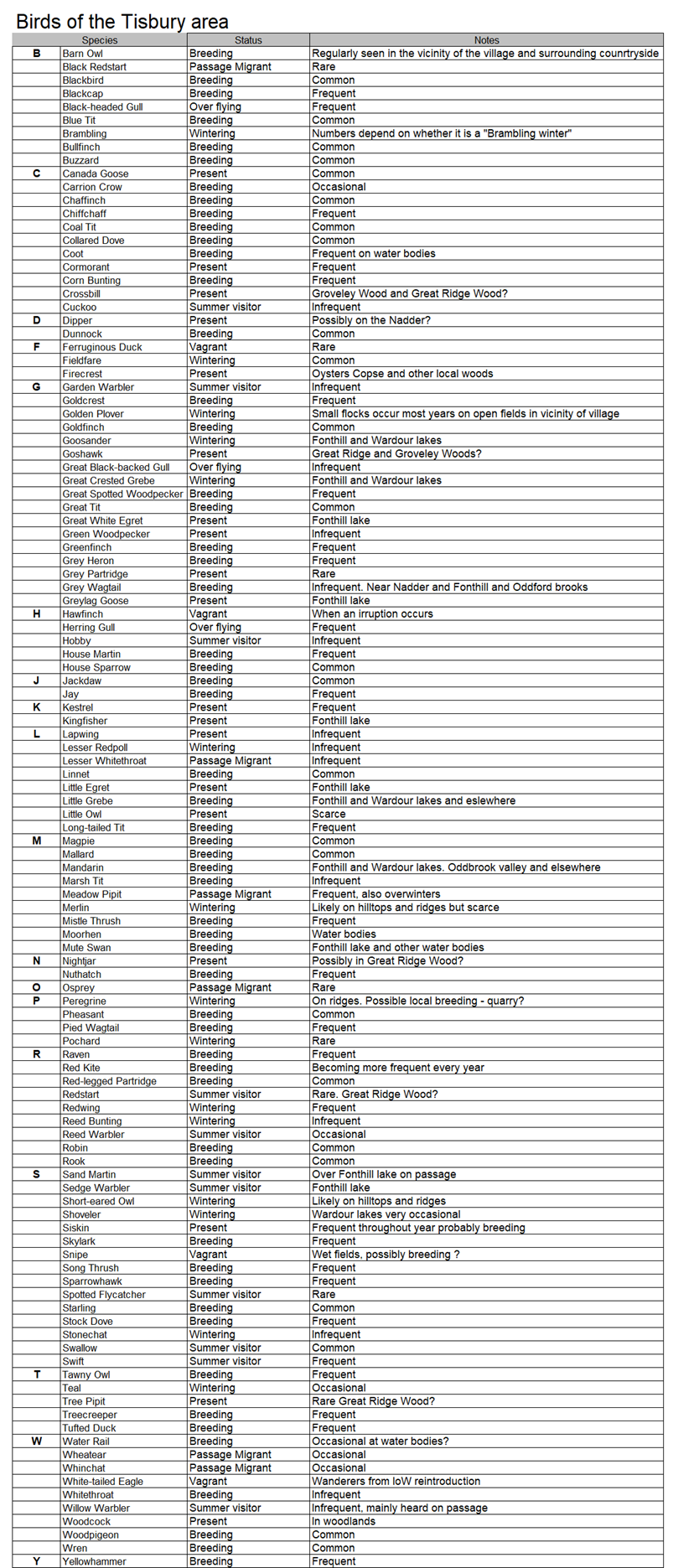
* The list is based on my experience over seven or so years since arriving in the area, and information I have gathered from others in that time.